Get Free Ebook Modified: GMOs and the Threat to Our Food, Our Land, Our Future, by Caitlin Shetterly
When someone should visit the book stores, search establishment by store, shelf by rack, it is quite bothersome. This is why we supply the book compilations in this web site. It will certainly alleviate you to look guide Modified: GMOs And The Threat To Our Food, Our Land, Our Future, By Caitlin Shetterly as you like. By searching the title, author, or authors of the book you desire, you could locate them rapidly. Around the house, office, or perhaps in your way can be all finest location within internet links. If you want to download the Modified: GMOs And The Threat To Our Food, Our Land, Our Future, By Caitlin Shetterly, it is extremely easy then, considering that now we extend the connect to acquire and make deals to download Modified: GMOs And The Threat To Our Food, Our Land, Our Future, By Caitlin Shetterly So simple!
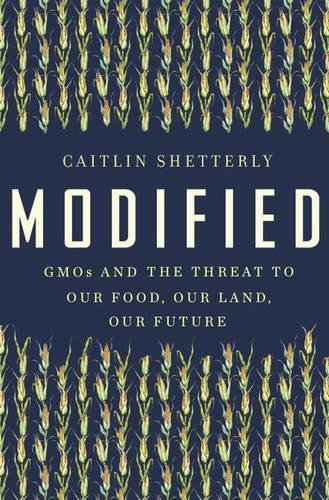
Modified: GMOs and the Threat to Our Food, Our Land, Our Future, by Caitlin Shetterly

Get Free Ebook Modified: GMOs and the Threat to Our Food, Our Land, Our Future, by Caitlin Shetterly
Modified: GMOs And The Threat To Our Food, Our Land, Our Future, By Caitlin Shetterly. Is this your leisure? Just what will you do after that? Having extra or leisure time is really remarkable. You could do everything without pressure. Well, we expect you to spare you few time to read this publication Modified: GMOs And The Threat To Our Food, Our Land, Our Future, By Caitlin Shetterly This is a god e-book to accompany you in this cost-free time. You will certainly not be so difficult to recognize something from this e-book Modified: GMOs And The Threat To Our Food, Our Land, Our Future, By Caitlin Shetterly A lot more, it will aid you to obtain much better details as well as encounter. Also you are having the wonderful tasks, reading this e-book Modified: GMOs And The Threat To Our Food, Our Land, Our Future, By Caitlin Shetterly will not add your thoughts.
Why must be publication Modified: GMOs And The Threat To Our Food, Our Land, Our Future, By Caitlin Shetterly Book is one of the very easy sources to try to find. By getting the author and also style to obtain, you can find many titles that supply their data to obtain. As this Modified: GMOs And The Threat To Our Food, Our Land, Our Future, By Caitlin Shetterly, the inspiring publication Modified: GMOs And The Threat To Our Food, Our Land, Our Future, By Caitlin Shetterly will certainly provide you exactly what you have to cover the work deadline. And also why should remain in this website? We will certainly ask initially, have you a lot more times to opt for shopping guides as well as look for the referred publication Modified: GMOs And The Threat To Our Food, Our Land, Our Future, By Caitlin Shetterly in publication shop? Lots of people might not have enough time to locate it.
For this reason, this web site offers for you to cover your problem. We show you some referred books Modified: GMOs And The Threat To Our Food, Our Land, Our Future, By Caitlin Shetterly in all types as well as motifs. From usual author to the famous one, they are all covered to give in this site. This Modified: GMOs And The Threat To Our Food, Our Land, Our Future, By Caitlin Shetterly is you're looked for publication; you simply should visit the link web page to display in this site and then go with downloading. It will certainly not take often times to get one publication Modified: GMOs And The Threat To Our Food, Our Land, Our Future, By Caitlin Shetterly It will certainly depend on your net link. Simply purchase and download the soft file of this publication Modified: GMOs And The Threat To Our Food, Our Land, Our Future, By Caitlin Shetterly
It is so very easy, right? Why do not you try it? In this site, you can additionally locate various other titles of the Modified: GMOs And The Threat To Our Food, Our Land, Our Future, By Caitlin Shetterly book collections that might have the ability to aid you finding the best option of your task. Reading this book Modified: GMOs And The Threat To Our Food, Our Land, Our Future, By Caitlin Shetterly in soft file will additionally alleviate you to get the source easily. You might not bring for those publications to someplace you go. Only with the gadget that always be with your all over, you can read this book Modified: GMOs And The Threat To Our Food, Our Land, Our Future, By Caitlin Shetterly So, it will be so quickly to complete reading this Modified: GMOs And The Threat To Our Food, Our Land, Our Future, By Caitlin Shetterly
A disquieting and meditative look at the issue that started the biggest food fight of our time--GMOs. From a journalist and mother who learned that genetically modified corn was the culprit behind what was making her and her child sick, a must-read book for anyone trying to parse the incendiary discussion about genetically modified foods.
*One of Publishers Weekly's Best Books 2016*
"More so than definitive answers, the questions that Shetterly advances are a persuasive reminder of how important the continued fight for true transparency in the food industry is." --Goop
GMO products are among the most consumed and the least understood substances in the United States today. They appear not only in the food we eat, but in everything from the interior coating of paper coffee cups and medicines to diapers and toothpaste. We are often completely unaware of their presence.
Caitlin Shetterly discovered the importance of GMOs the hard way. Shortly after she learned that her son had an alarming sensitivity to GMO corn, she was told that she had the same condition, and her family’s daily existence changed forever. An expansion of Shetterly’s viral Elle article “The Bad Seed,” Modified delves deep into the heart of the matter—from the cornfields of Nebraska to the beekeeping conventions in Brussels—to shine a light on the people, the science, and the corporations behind the food we serve ourselves and our families every day. Deeper than an expos�, and written by a mother and journalist whose journey had no agenda other than to understand the nuance and confusion behind GMOs, Modified is a rare breed of book that will at once make you weep at the majestic beauty of our Great Plains and force you to harvest deep seeds of doubt about the invisible monsters currently infiltrating our food and our land and threatening our future.
- Sales Rank: #174266 in Books
- Brand: imusti
- Published on: 2016-09-20
- Released on: 2016-09-20
- Original language: English
- Number of items: 1
- Dimensions: 9.31" h x 1.06" w x 6.25" l, .0 pounds
- Binding: Hardcover
- 352 pages
- G P Putnam s Sons
Review
Praise for Modified
"Caitlin Shetterly has written a passionate, provocative book that undoubtedly will be studied and scrutinized for the history it presents, and the stand it takes. It offers us Shetterly’s own intimate journey, sparked by personal desperation and real curiosity. And like the best of books, it mixes the domestic with the global, the scientific with the quixotic in an attempt to understand the dangers of the food we eat. Intrepid, urgent, prescriptive, and ultimately revelatory, Modified is important for our times."
—Michael Paterniti, author of The Telling Room and Love and Other Ways of Dying
�
“Caitlin Shetterly’s powerful new book, Modified, through dogged research and with the fierce determination of a mother, exposes, in elegant prose, the wholesale genetic modification of our food supply. Her personal odyssey pursuing the truth, colored with clear scientific and historical context, is a clarion call about the dangers of corporate control of our food supply and, importantly, what people can do about it."
—Amy Goodman, host and executive producer, Democracy Now!
�
Modified�is the intriguing and compelling story of one woman’s brave pursuit of her own health—and the facts about the food we eat. A thoroughly consuming read.”—Lily King, author of Euphoria
“Riveting from beginning to end, Modified�reads like a hard-hitting investigative thriller. Shetterly is a thorough, even-handed journalist and a clear, persuasive writer. Ground-breaking and explosive, this is a book for everyone who wants to understand what they are feeding themselves and their families. Reading it has opened my eyes and changed the way I buy food.”
—Kate Christensen, author of The Great Man and Blue Plate Special
"Sometimes people ask me why activists oppose GMO crops. This book�by Caitlin Shetterly, both�personal and provocative, provides as clear and detailed an answer as I've seen.�No matter your take on this issue, you'll want to read and consider�Modified."
—Bill McKibben, author of�Eaarth�and�Deep Economy
“Intensely personal…a compelling case that consumers worldwide need more education on this important issue.” –Publisher’s Weekly, Most Anticipated�Book for Fall 2016
"Shetterly’s accessible, well-researched, and damning work brings clarity to an often fuzzy debate.”–Publisher’s Weekly, starred review
“[Shetterly’s] passionate advocacy, combined with descriptions of multiple research studies and interviews with scientists, doctors, and farmers, makes a compelling case that consumers worldwide need more education on this important issue."—Library Journal, starred review
“[E]ye-opening…. Modified is [Shetterly’s] passionate and rather horrifying account of what is happening in the heartland and to our food supply.”—Vogue
Praise for Shetterly’s Made for You and Me�
�
�
“[A] beautiful, moving, haunting, and funny memoir about what really counts . . . a sublime gift of a book.” —Scott Simon, host of NPR’s “Weekend Edition Saturday”
�
“Resonant and richly detailed.” —Kai Ryssdal, host of NPR’s “Marketplace”
About the Author
Caitlin Shetterly is the author of�Made for You and Me: Going West, Going Broke, Finding Home and the bestselling Fault Lines: Stories of Divorce. Her work has been featured in The New York Times Magazine, Elle, and Self, and on Oprah.com and Medium.com, as well as on "This American Life" and various other public radio shows.�She lives with her family in Maine.
Excerpt. � Reprinted by permission. All rights reserved.
***This excerpt is from an advance uncorrected copy proof***
Copyright � 2016 Caitlin Shetterly
Chapter 1.
�
The blue Nebraska sky stretched above my car like a tight rubber band, the wind held its My Antonia constancy and the sun beat down. All around, as far as the eye could see, were dusty brown fields of dried soybeans and golden fields of dried corn. There were no trees.� Just that huge, open expanse of soy and corn crop after soy and corn crop, alternating gold and brown and open to the big blue sky. Tractors glinted in the sunlight like ships at a distance sailing up and down, methodically cutting ribbons out of a sepia ocean while dust billowed like a thick and impenetrable storm behind them. Harvest time.
�
����������� The day before, I had landed in Denver, Colorado in the late afternoon. When I deplaned and exited the airport, standing for a moment on the hot, dry concrete sidewalk outside the baggage claim, my rolly suitcase gripped in my right hand and my black LL Bean backpack on my shoulder, I was suddenly and immensely thirsty. I looked up and saw the Rocky Mountains rising, snow capped and gleaming, before me; they seemed so close. I wondered if I could just reach my arm through that horizontal and relentless sun, if I’d be able to dip my hand into that snow, bring a handful to my mouth and cool off. As I turned away from the mountains toward the rental car lots, the land before me stretched as flat as paper across the Great Plains of Eastern Colorado and into Nebraska, where I was headed.�
����������� I had come to Denver to start somewhere; to start telling a story, a story which I’d stumbled upon in that life becomes art and art becomes life kind of way. Two months earlier, I’d published an article in Elle magazine about a long and tedious illness which had plagued me for nearly four years until I met Dr. Paris Mannsman, an allergist and immunologist based in the suburban town of Yarmouth, Maine—a short distance outside of Portland, where I lived. Mannsman had asserted that, in his opinion, I had developed sensitivity to the pesticides bred into GMO corn and the proteins that are created from DNA insertions; these genetic aberrances, he posited, had caused my immune system to go haywire.
����������� Although his theory seemed unorthodox, perhaps crazy—and, it turned out, also majorly controversial-- I decided to try it. I was too desperate not to. I’d been sick for so long—during the first year of marriage and for the entire first two years of my son, Marsden’s, life. And by sick I don’t mean that I was just “not feeling great” or that I was a little queasy. I mean that I was so sick that I was often unable to get out of bed because arthritic pain radiated throughout my body, making my thighs and ankles weak and causing me to hobble around like a ninety-year old (my ankles, I’d joke to Dan, felt like they’d been “Kathy Batesed,” referring to the movie, Misery). I was exhausted—yet, my body was in such a state that I felt like I’d been plugged into an electrical outlet and couldn’t relax enough to sleep. I had horrible headaches, a constant head cold, tingling and numbness in my feet, legs and arms and rashes splattered like pizza sauce on my face. During this time, I had tried every diagnosis—or theory-- that came my way, including hormonal treatments, vitamin injections, iodine pills, elimination diets and a long and debilitating course of powerful antibiotics aimed at curing me of chronic Lyme disease. Everything seemed to make me sicker, not better. I felt like Christina in the famous Andrew Wyeth painting; the world was just out of reach. My life was passing me by while we spent thousands and thousands of dollars we really did not have to consult with anyone who would see me-- from Harvard educated MDs to shamans. All the while, we just were hoping someone would find a key to unlock this puzzle and make me well.
����������� But desperation wasn’t the only reason I was game to try Mannsman’s theory. In 2010, long before I was even thinking about genetically modified organisms, known as GMOs, and before I had any inkling about what might be wrong with me, Marsden, then one year old, started to have episodes at bedtime when he would cry so hard that he would stop breathing and turn blue. The first time it happened my husband, Dan and I raced to the car and then to the ER where our baby was hooked up to an EKG. The diagnosis: “He has a behavioral problem called ‘breath-holding syndrome.’” We looked blankly at the doctor.� “It’s like a tantrum,” she continued, “kids do it to get their way sometimes. You need to be more sure in your parental decisions—if it’s bedtime, it’s really bedtime.” A nurse piped up then, “I knew a kid who had these until she was five! The family would say, ‘Oh here she goes again….’” The ER doctor suggested distractions, which might help him “forget” to hold his breath. In a bizarre twist of this-must-be-dark-theatre-not-my-life, I found myself following the ER doctor’s advice and for the next three nights I was singing “If you’re happy and you know it, clap your hands!” as Marsy screamed inconsolably and turned blue and then white in my arms.
Call it a mother’s instinct, but after three nights of this stop-breathing routine—the surest way to turn a new mother one hundred and fifty years old is to scare her shitless—I was convinced that something else was at play, bigger than my son having “behavioral problems.” When he was born he radiated goodwill; he took one look around and gave Dan and me an expression that seemed to say, “What’s all the fuss guys?” He rarely cried; he was fascinated by our big, complicated world. At two months old, we drove him across the country from Los Angeles to move in with my mother in Maine. That whole trip he’d been cool as a cucumber. Up until now he was a good sleeper, and a happy, mild-mannered baby.
Thankfully, our pediatrician also wasn’t convinced these symptoms were a behavioral problem or some defect in Marsy’s character we needed to eradicate. She wanted to revisit his perennial eczema, which he’d had since he was a tiny baby.� The eczema had progressed like California wildfire since the introduction of solid foods, going from little sore patches behind his knees and elbows to covering his trunk and legs and climbing up his cheeks. At night, I slathered him in organic oils and rubbed zinc oxide on the worst bits, to little avail. She suggested an elimination diet because food allergies, she said, can also affect behavior.
Over the next few months of winter and into the spring, we put our son on an austere diet that avoided—all at once-- wheat, eggs, dairy, corn, soy, nightshades, fish, shellfish, peanuts and nuts. Interestingly, corn, at that time, like nightshades, was not on most elimination diet programs (though the pediatric baby guru Dr. Sears does include it on his list). But our pediatrician said it was possible—though like nightshades, unlikely—so we added it to the list just to be thorough. In a matter of days, the death-imitating tantrums stopped and the eczema began to abate.
Eventually, when we thought that Marsy seemed much better, we started to reintroduce foods. First up: corn, our most American and wholesome of foods, the one food I assumed would be the safest because who in the world could have a problem with corn?� I loved corn. I loved the way it looked growing green and leafy and innocent and all-American in fields across our landscape. I loved to eat it: Corn chips, sprouted tortillas, popcorn, nachos, frozen corn with butter, soft polenta with Parmigiano and butter thrown in at the very last second of cooking and topped with baked kale (this was the first meal I’d ever made for Dan) creamed corn, and I’d put pureed corn into most of my homemade veggie baby food mixtures, thinking I was adding extra fiber, sweetness and goodness. Being a person who loved to cook and eat--a self-professed foodie--I didn’t like to think that anything was off limits. Instead, I liked to think in terms of textures and flavors, colors and bounty. And corn—and corn products—were included in my food landscape.
����������� My Dad, who is a Frito’s nut, even had a family story that he liked to share in late August when local corn on the cob was ready. He told us about the gadget we had in our kitchen that my great grandfather, Orton Galloway invented in order to scrape a corncob free of fresh, juicy kernels to make creamed corn. The gadget looked like a little wooden bench with some nails sticking up in the center and there was a little narrow opening just after the nails for the kernels to fall through. When my great granddad Orton got to the U.S patent office to register his invention, the story goes that he found a room full of people all waiting to register variations on the exact same corn-scraping device. Nonetheless, when I was a child, my Dad used his grandpop’s invention faithfully every summer, cooking the fresh kernels in a double boiler so the corn didn’t burn and adding in butter, salt and pepper. Sometimes we’d have this as a kind of porridge for breakfast and sometimes we’d eat it alongside fish or hamburgers.
And, in recent years, these creamed corn devices seem to have gone the way of the dinosaurs. Once, my Dad was on a business trip one summer down in Kentucky and was out walking on a Sunday morning when he walked by the window of an old junk shop. In the window was a corn scraper just like the one his grandfather made and underneath it was a small, cardboard sign with the words “What is this?” written in black Sharpie. When Dad got back to Maine the next day, he called the shop up and told the proprietor what it was. Then he bought the scraper and had him send it to my brother.
Our pediatrician had told us that we should deluge our fasting patient—every meal should contain the food specimen we were scrutinizing for three full days, as this was the best way to really get it into his system. Lo and behold, over the test period for corn, eczema splotched and then raged, red and painful, over his limbs and cheeks. His nose ran like a faucet and the mucus made him gag and choke. He was crankier, slept fitfully, had runny bowel movements and his breathing sounded raspy at night. Again, he cried inconsolably at bedtime. At that point Marsy was only 15 months old, so he couldn’t tell us much—if his belly or head hurt or if he itched all over. However, Dan and I could see with our own eyes that something was happening and that he was miserable.
With our pediatrician’s guidance, we took corn back out of Marsden’s diet—or at least we thought we did. The FDA, it turns out, doesn’t require that corn be labeled as an allergen on any packaging. And, in fact, there are over two hundred and fifty non-organic substances—often chemicals-- that are legally allowed in “organic foods” many of which are made from industrial, or GMO, corn. GMOs, as of yet, still require no labeling in the United States (and there is a huge Washington push from the chemical companies to make it impossible for the states to regulate labeling on their own.[1]) These days, oddly, in the face of the politics, more and more manufacturers—wise to the increasing cacophony around GMOs and our industrial food system—are starting to label corn or omit GMOs altogether. (Just yesterday I looked at a label for “Salt and Pepper Potato Chips” from Whole Foods and I almost fell over. There, in huge print, under the ingredient list, which included the words “dextrose” and “maltodextrin,” it said in huge letters “DERIVED FROM CORN.” This is new.[2])
As time marched on, Dan and I discovered with dizzying helplessness that corn is in everything—it was our Waldo, popping up everywhere we least expected it: baking powder, cheese, vitamins, medications, tea bags, juice, dish soap, preservatives, lining paper of coffee cups, the waxy coating on the outside of store-bought apples. You name it, almost everything my family used, no matter how piously natural and organic it was, could be traced back to some cornfield in Iowa. It came guised under dozens of names like ‘xanthan gum,’ ‘vegetable starch,’ ‘modified food starch,’ ‘citric acid,’ ‘natural flavors,’ and vitamin C. Almost daily, we’d turn a corner and realize, “this toothpaste is full of corn!” And then, the next day, “wait, our dish soap is made from corn!” A week later, “Oh my God, iodized salt has dextrose in it!” And, “Fuck, this kiddie ibuprofen is full of corn!” Even baby food labeled as “ 100% organic” and “non-GMO” often has citric and ascorbic acid added as preservatives, both of which are made from GMO corn.
One night, overwhelmed, I said to Dan, “This is impossible.” We somehow agreed—though viewed through the lens of time this seems crazy, if not irresponsible—to accept defeat.� We were exhausted, we were confused, we couldn’t stand it anymore. If providing our son with food, clothing and shelter were our three most important jobs, it felt like we were failing at the first one. We decided finally that we’d make our son “well enough.” Corn was too formidable an opponent to truly eradicate.
But to add to the overwhelming stress of that confusing period when we were trying to stick our fingers into a leaky silo from which corn seemed to flow unendingly into our lives, the illness I was suffering from—the one that no one could quite pinpoint—started to get worse.� Some of my symptoms were not unlike my son’s: the facial rashes, constant head cold and IBS. But it was the bodily pain and achiness that was the hardest for me to handle, and it was getting worse. It had traveled, most depressingly, to my hands, which were so stiff and painful that they became completely useless for tasks like buttoning my son’s little sweaters, applying Band-Aids to Marsy’s delicate skin, opening jars of baby food, or finely chopping parsley, which I like to add to just about everything I cook. My hands hurt when I tried to walk Hopper, our big, sleek, Rotty Shepherd mix, and frozen hands did not prove ideal for my career as a writer, either.� For months I had been trying to push these symptoms to the side—take a few Advil, take my vitamins (fistfuls of them, all promising to make me strong as an ox) eat as healthily as I could manage and drink some coffee to get my energy up—and focus on my child. Whatever was up with me, I didn’t feel like facing it.
I told almost no one—even friends and extended family—how sick I was because I didn’t have any way to explain what was wrong: I had no diagnosis, just a collection of symptoms. “It’s stress,” Dan said to me at night.
“It’s stress,” I told my mother.
�Looking back, I realize now that Dan and I spent an extraordinary amount of time pretending to the rest of the world that “we’re fine over here,” even though at home in private moments we drained hours worrying, researching, and then just plain praying that my illness would go away.
Finally, one hot summer night in August of 2010, after a particularly hard day when I could barely get out of bed, Dan and I looked at each other and said, “This is something. It’s real. Nothing is working. We can’t keep on like this.” I remember that moment so clearly, because it was the turning point: We started fearing the worst. Something had gotten hold of us and taken up residence in our lives. Whatever it was, if it wasn’t life threatening, then it was surely life ruining. And just in admitting our fear, it seemed we were already done in by whatever this was. I also remember my knees buckling—I was standing in our small pantry and Dan was standing in the kitchen as we talked—and I crumbled down to the floor, overwhelmed with unhappiness, tears springing from my eyes, kind of like in those old black and white movies when the heroine faints and has to be revived with smelling salts. (Just call me Scarlet.)
A few weeks later, I started going back and forth to Boston’s Mass General Hospital. I had batteries of new tests checking for every conceivable allergy, condition or disease out there. With each test, Dan and I girded ourselves for the worst. But my symptoms were perplexing—even vexing—to every specialist who saw me. I got the same stumped looks, all of which led to more referrals. In the next few months, one hunch after another was posited and then debunked: I had brain scans, neurological work ups and drug trials. Nothing made me better. I kept getting worse.
Then in February of 2011, I made my way to Dr. Mannsman’s office. It sits on the banks of the Royal River, a wide waterway that originates north in the town of New Gloucester and winds south, through Yarmouth, until it splashes into Casco Bay. The river was frozen and white and the bare trees stood silver sentry on its shores. Dr. Mannsman has a helmet of graying, thick hair and an intensely serious air. He speaks softly and at a measured, almost monotonous, pace. On that February day, after his wife, Leslie, checked me in, he led me through the waiting room lined with filing cabinets and piles of medical journals and thick books with titles like Immunology, Rhinitis and Stedman’s Medical Dictionary. We walked through his small lab, where he has a microscope, beakers and bottles of solutions. He led me into a little exam room equipped with a metal table and a wooden desk.
Mannsman is a third generation allergist who began working in his father’s allergy clinic at Jefferson Medical College in Philadelphia when he was in high school. He told me modestly that he had helped his father develop “a couple” of asthma drugs when he was in college at St. Josephs University in Philadelphia. (The drugs, Slo-Bid and Aerolate were used to treat asthma for years.) After undergrad, Mannsman went on to pass three medical boards—general medicine, pediatrics and, finally, allergy and immunology --which he completed at Duke University on a fellowship from the National Institutes of Health. From Duke he went to West Virginia University, in Morgantown, where he headed an allergy and immunology clinic and worked with the National Institute for Occupational Safety and Health studying respiratory disease caused by workplace exposure. In 2000, he and his family moved to Yarmouth, Maine to be closer to his parents, who had moved to the Rangeley Lakes area, and needed a family member close by.
Mannsman and I sat down together and he promptly pushed my thick tome of medical files to the side and pulled out a blank piece of paper. He told me he’d already read through everything but that he wanted to start at the beginning and hear it from me. “You’ve had every test I could ever think of running,” he told me. “So now I just have questions.” And then he did begin asking me questions, questions I’d never been asked in quite the same perfunctory, logical way: When did my rashes seem to flare? Was the pain an ache in my muscles or did it feel deeper? Did my hands feel tight and stiff, or was it my joints that hurt? Was I worse after I slept or at the end of the day? Were there good periods and bad? Did I always have that cold? Did I ever have trouble breathing? He seemed, as we spoke, to have all the time in the world. I began to relax a bit because I felt like someone was really hearing me for the first time in four years; someone was able, at least on the face of it, to put my symptoms into a list that made sense.
I told him how frustrated I was; that I was missing time with my kid, that this had gone on for too long. And then in a moment of vulnerability, I told him I was afraid. He nodded and informed me, with little emotion, that autoimmune diseases could sometimes take at least eight years to diagnose. “That being said, however,” he said casually and with no pyrotechnics, “I think it’s possible you’ve developed a reaction to genetically modified corn.”
���������������� I looked at him dubiously.� “What?”
���������������� Wasn’t it George Orwell who wrote that, “Writing a book is a horrible, exhausting struggle, like a long bout of some painful illness?” Couldn’t I just be tired, I asked? I mean I did just finish writing a book…almost a year ago. But still. Or could it be stress? Whatever he was talking about seemed too strange to even consider.
���������������� He shook his head.� He said he’d come to believe, in the years since GMOs were first introduced, that some people might be developing a kind of chronic allergic response that was not caused by the corn itself, but instead by the enterotoxins bred into the corn to make it pest resistant and Round-Up Ready. He said that he thinks that the small modifications that are made in the DNA of GMO corn can cause the immune system to overreact—and a faucet gets turned on. This specific reaction, he believes, causes the body to release an avalanche of eosinophils—a kind of white blood cell— from the bloodstream into the mucus membranes, muscles, fascial system and bowels, and tends to look much more like an autoimmune disease or something that used to be called “chronic serum sickness.” Chronic Serum Sickness is described as a kind of hypersensitivity of the immune system on overdrive, often in reaction to medications or drugs, and includes the following symptoms in its diagnosis: “rash, arthritis, arthralgia, and other systemic symptoms.”� Specifically, Mannsman said he believes that the enterotoxins bred into GMO corn could actually cause serum sickness—much like a drug or medication could. In his opinion, my body had become “primed” in a state of constant reaction and therefore it seemed to be allergic –or sensitive—to everything.
����������� To test his theory, he took a swab of some mucus from inside my nose. If the eyes are the windows to the soul for most of us, then the nose is the window to the immune system for Dr. Mannsman. He smeared the mucus on a small glass slide and then took it with him to his sink. There he doused it in Hansel’s stain, a blue medical dye used to identify eosinophils, and then rinsed it off, to leave a pinkish smear on the slide. He placed the slide under the microscope and then stood back and said, “Take a look.” On the slide were hundreds of pink circles, which he told me, were eosinophils. My nose was chock-full of them. When the immune system is working properly, he told me, eosinophils swarm certain invading substances, be they parasites or viruses, and work to eliminate them. Sometimes, however, an allergenic protein can prompt the immune
system to release eosinophils. Then, if the allergen can’t be detected, the eosinophils just keep coming, creating a chronic condition. He felt if we could calm my body down with the elimination of corn, my whole being would come back into balance.
����������� Mannsman told me to take all corn out of my diet—no matter if it was organic (organic, just in it’s nature, according to USDA labeling laws, cannot be GMO) or not--and not just the obvious stuff like corn on the cob and tortillas, but all that hidden corn in vitamins and preservatives, dough conditioners and free flowing agents. His reasoning was that it’s difficult to find a clean source of non-GMO corn in the United States (or anywhere) because, since the late ‘eighties and early nineties when genetically modified corn was first planted across the United States (now comprising over 90% of all corn planted in this country—over 90 million acres) all corn has become contaminated due to wind pollination, birds, bees and simple human error. “Not everyone is allergic to these enterotoxins,” he said, “but it’s an exposure issue. You expose somebody to an allergen and then they develop an allergy to it.” The problem with America, he said, “Is that we’ve got a very corn-driven food system—it’s in everything, and so the exposure levels are very high, day in day out.”� What about soy, I asked? I knew just in a cursory way that GMO soy, too, was ubiquitous.� He told me that was a good question and that although soy has not proliferated to the same degree into every corner of American lives, trying to stay away from GMO soy would be a good idea. Cornstarches carried more allergenic proteins and were less refined, he told me, than corn sugars. He recommended that Dan and I start making pretty much everything we ate from scratch and that we get very familiar with our farmer’s market and seasonal vegetables. He extolled the virtues of eating seasonally and was practically rhapsodic about “spring vegetables” making my mouth water. He said it would take my body a year to fully heal. But that there was good news, too: In two to three years of living corn free, he said, my body might be able to tolerate small amounts, he thought.
�������� Dan and I threw ourselves into the corn-free diet with gusto, following Mannsnman’s advice that we might as well take out all corn. We began baking all our bread, we learned how to make our own flour tortillas, baking powder, pasta and sweet treats like muffins and cakes. We made our own mayonnaise, bean dips and ice cream. [3] And we started hitting the Portland Farmers Market with a new attitude: this was our food for the week, not just a lovely Saturday night supper. We made friends with the vegetable rock stars at the market: Daniel of Freedom Farm; Chris and Galit of Fishbowl; Simon of 30-Acre; Jan of Goranson’s; and the guys at Uncle’s farm stand. We started buying larger quantities of everything at the end of the summer--Maine grown dried beans (black, Jacob’s Cattle, Mirfax, yellow eye and navy), tomatoes[4], broccoli, cucumbers, stone fruits, berries, cabbages, celery, squashes, ginger and pumpkins—and we canned, jammed, pickled and froze them at night and on weekends through September and into October. We joined a local buying group through Jodi that sourced fresh, local whole foods from around Maine. We started gardens to grow our own tomatoes, herbs, lettuces and spinaches, zucchinis and peppers. In the fall, we picked a huge amount of apples every year at Ricker Hill, a farm in the hills near Lewiston, and canned them as applesauce. One year I was even forward thinking enough to make six fresh pies and freeze them for the coming winter. We bought Maine-grown grains.
�������� By luck, we met an intrepid farmer trying to raise corn-free chickens (harder than you might guess, because chickens have literally been bred to get fat fast on corn) and began buying his meat chickens. We started gathering grass-fed beef from a young Cornell graduate who had taken up farming outside of Portland. His meat came as hamburger, pot roasts, steaks, stew beef (which I use to make a Texas chili during the cold winter months, usually serving it atop toothsome rice --brown or white-- with a generous spoonful of guacamole on top.) and brisket for New England boiled suppers or for slow roasting with tomatoes, wine, mushrooms, celery and spices.� We bought wild fish (never buying farm raised which is often fed GMO soy and corn) and we found a local farmer who produced grass fed dairy. Marsy and I stopped taking every medicine or supplement with corn in it, which was most of them (and we had a local apothecary mix up corn free acetaminophen and Benadryl.)[5] Wherever we went, we took our own stainless-steel water bottles and coffee cups (to avoid the paper cups that are lined with a wax made from corn.)
�������� In a matter of months, we estimated that at least 85%, if not more, of our food became locally sourced and everything we ate was now organic.� Now it’s important to remember that it’s not like we were doing this on some trust fund budget, where the sky was the limit on what we could spend, and that we had some capacious and bucolic land around us in which to garden and cavort. We were living in an apartment for part of this time, and then, as time went on, renting a house with a little, sandy yard for another chunk of time. At the house we put in raised beds to grow what we could and plugged in a big freezer. In the meantime, we were allocating a good portion of the money we made to our food, at the expense of skiing weekends, gadgets and cool Patagonia vests, Furthermore, we had to completely upend the dictum that many of us in American live by: time is money. In our lives, we had to jettison the desire for expeditious meals and slow down, slow research every little thing we bought to eat, slow cook, and slow eat. This could feel really arduous at 11 PM on a school night when we still had to can forty pounds of tomatoes before they went bad. But if Hippocrates’ statement “Let food be thy medicine” were words to live by, we were holding onto them like a lifeline.�
As we cleaned out for real this time, undaunted by the Sisyphean task of it now that we had a doctor’s order behind us, Marsden’s eczema completely disappeared. His nose stopped running constantly and his whole body seemed to calm down noticeably. For myself, the first thing I noticed was that my own seemingly untreatable and just unbearable skin rashes began to dissipate. Slowly, my body stopped aching, and I could walk distances or even jog easily without limping, for the first time in years. I started to have more energy, and I slept better at night. The head cold went away—poof—and I wasn’t going through a box of tissues a day. Almost four months later, in late May, I felt pretty much like my old self.
During this trial our control group was Dan. He had no problems—that he knew of—with corn. And he’d never tested positive on an allergy test for corn. But he has struggled his whole life an autoimmune blood disorder known as ITP that causes his white blood cells to attack his platelets, making him have fewer platelets than what is considered normal. Most of us walk around with anything from 150 to 500 thousand platelets in a given sample. Dan’s can be as low as 7, 000. As he remembers it, that lowest number of his—7,000—was during a period when we were eating a ton of corn—polenta, tortillas, popcorn, fake butter made with corn oil—and eschewing dairy and gluten because we thought those things, just from popular wisdom, were bad for us.� A year into living corn free, Dan’s platelet count rose dramatically, going above 45,000, which was higher than he’d ever had in his life. Was this coincidence? Perhaps. We don’t know. Health is such a mystery isn’t it?
In the meantime, I was so startled by my physical well being that I didn’t know how to enjoy it. Each night I’d go to bed preparing myself for the possibility that I might wake up the next morning and be sick again. And I found myself asking Dan over and over like a broken record, Could GMO corn really be my problem?� What if it isn’t and this comes back? Will this blessed state really last? I couldn’t let go; I had to know more.
���������������� The first question to tackle: What is genetically modified corn? Like many people, I had read Michael Pollan’s The Omnivore’s Dilemma and seen Aaron Woolf’s documentary King Corn and had learned from both about the proliferation of corn into our food and everyday products. But I’d be lying if I didn’t admit that the GMO thing was, at best, a little fuzzy for me still. I’d honestly never stopped to think about the fact that the corn I was eating wasn’t the same old corn my parents and grandparents grew up eating (or the corn my great grandfather invented that doohickey for). And even though I’d known, I suppose, in some recessed crunchy granola part of my brain that “GMO” was a term to regard suspiciously, I realized, suddenly, like a child first figuring out the “F” word, that I’d never stopped to think about what it meant.
���������������� �A little bit (and then a lot, as time went on) of research led me to the following information: To genetically engineer a food, a scientist takes two different species—for instance a flounder and strawberry—and splices, or meshes, their DNA together. This “meshing” is done with stainless steel or gold bullets—yes, real bullets—which have been dipped in strands of the DNA that carry the desired traits and tungsten. The bullets are then actually shot out of a gene gun, which is, for all intents and purposes, a real gun. The Crosman air pistol was used to make the first GMOs. It looked kind of like this:
�
(Art 2)
�
���������������� These days the gene guns effectuate the power of 22 caliber guns but the barrels are built into sophisticated looking machines that look sort of like those ice machines you see in bars—big, top-opening, stainless steel vaults of hard, glassy ice. They still shoot their bullets into Petri dishes containing sample cells. Once they hit the Petri dish, the bullets break the nuclei of the host DNA and affix themselves into the host’s now broken double helix. Ok, so somehow, whenever I hear this explanation of genetic modification, I imagine the song from Annie Get Your Gun, “Anything you can do, I can do better; I can do anything better than you.” Anyway, it’s a pretty inexact science in that it’s unclear exactly where the genes land in the host plant and exactly how they will get expressed, but what is clear is that the host plant—strawberry, corn, cotton, soy, what have you—will then, by some scientific miracle, begin to manufacture the inserted DNA. Some scientists posit that it’s more accurate to call GMOs “transgenics,” because they, in fact, carry genes that have been transferred across two phyla. For obvious reasons (too similar to transgender, anyone?) this word has not stuck with the pro-GMO camp, who prefer, these days, to just call GMOs, simply, GM (Genetically Modified) in an effort to get away from the negative connotations associated with the now fairly well-known acronym “GMO.”� For our purposes we’ll just go with “GMO” since it’s what everyone understands to some degree.
���������������� An important point to remember that is rarely discussed in this argument of what’s inserted into what and how, is that not only is there the DNA of, say, the flounder being inserted into the strawberry, but there’s also the “promoter,” a section of DNA from a virus or bacteria which acts as a signal for the start of the transcription gene and will help the DNA attach, and the “marker” which will tell you where the DNA is when you test your final product (it’s actually an “antibiotic resistance gene which is also fired into the GMO, which has led some scientists to posit that these genes might increase antibiotic resistance in people) and then there’s the “terminator” gene –in many cases, but not all, as some companies have ceased making terminator genes—which tells the plant when to stop making the inserted DNA and can render the seeds sterile.
���������������� In terms of corn, one of the insertions--or “the flounder” in this case-- is a bacterium (not a plant) called Bacillus Thuringiensis, or Bt. Just so we’re clear on this: The bacterium is not the same species. You would never—in nature—be able to make a bacterium and a corn plant mate, just like you couldn’t make a strawberry and a flounder mate, no matter how randy that flounder was and how juicy the strawberry looked. This is not the same as hybridizing an apricot and a plum—getting a peach to mate with a plum and then for whatever that is to mate with an apricot to make a pluot. I find that people like to say that farmers have been “genetically modifying” our food for ten thousand years. This is just not accurate. It is only true in a really fuzzy way: for instance you can take the branches from a Macintosh apple tree and splice them onto a Cortland to get another Mac tree (above the graft only), but you are never making a transgenic. To underline: A GMO, most often, carries the genes from two different species—and only technology can make this happen. No farmer or plant breeder or botanist can make this happen outside of a lab. Again: GMOs can only be made in the laboratory. Nature will never make one on her own and you can’t make one out in the field, no matter how brilliant a farmer you are. Furthermore a GMO will never be “organic” in the literal sense or the USDA labeling sense (the best GMO-free label out there, of course, is simply the “organic” one[6].) Michael Pollan writes in The Botany of Desire “The deliberate introduction into a plant of genes transported not only across species but across whole phyla means that the wall of the plant’s essential identity—its irreducible wildness, you might say—has been breached, not by a virus, as sometimes happens in nature, but by humans wielding powerful new tools.”
���������������� Now, back to corn: Bt is an interesting bacterium. It was first discovered by a Japanese biologist, Ishiwata Shigetane, in 1901 and it’s a soil-dwelling bacterium that can also occur naturally in the gut of some kinds of caterpillars, moths and butterflies and on leaf surfaces, in animal feces, and in insect-rich environments—in short it’s all around us. Some Bt produces crystal proteins called endotoxins, or Cry-proteins, which have been found to have an insecticidal action against a variety of moths, beetles, wasps, bees, ants, flies and mosquitoes and roundworms.� Bt is closely related to B. anthracis, which causes anthrax—however it differs in its plasmid (“A short, circular piece of DNA that occurs in bacteria and acts like a tiny bacterial chromosome,” according to the reference book Botany: An Introduction to Plant Biology)—in the case of Bt, the protein the plasmid creates targets only the caterpillar; in anthrax it targets any life form.
���������������� �In 1911, a German scientist was able to isolate the bacterium as the cause of a disease called Schlaffsucht, or septicemia, in flour moth larvae, and in the following decades the first research was accomplished that indicated that if the bacterium were introduced into the environment of some insects, it would cause this disease which would work like an insecticide. In 1962, Rachel Carson wrote optimistically about Bt in her pioneering book Silent Spring, which elucidated the dangerous risks of the pesticide DDT:� “High hopes now attend tests of another bacterium of this genus—Bacillus thuringiensis….Within its vegetative rods there are formed, along with spores, peculiar crystals composed of a protein substance highly toxic to certain insects, especially to larvae of the moth like lepidopteras. Shortly after eating foliage coated with this toxin, the larva suffers paralysis, stops feeding, and soon dies.”
���������������� In the years after Silent Spring, Bt began to be manufactured by various companies across the United States as an agricultural alternative to some pesticides because insects were becoming resistant. Early studies seemed to show that when used as a sprayed insecticide on crops, Bt would be effective for a little while and then would eventually dissipate with time, rain, sun and air. It was decided that because of this it had little effect on pollinators, the environment or humans and wildlife. So, eventually, some strains of Bt were also approved for use on organic crops. Then, in 1995, the first genetically engineered crop, Bt corn, which carried the DNA of Bt, was registered with the EPA by Monsanto, the largest and most famous Chemical and Biotech company, based in St. Louis Missouri and known for being the creators of Agent Orange, Saccharin, RgBH (bovine growth hormone), PCBs, Roundup, and the first GMO products.[7] Monsanto’s goal was to incorporate the Bt into the plant so that a corn borer caterpillar would take one bite of the corn (or anywhere on the corn plant) and die. A corn borer, by the way, looks like this:
(Art 3)
� So this is the little critter that encouraged the first GMO and started the big war. Kind of an ugly dude, right?
���������������� Monsanto’s Bt corn worked so great at killing the corn borers that the company knew they had a hit on their hands. Without further ado, in 1996 Monsanto’s Bt corn was approved for sale in the United States, even though no independent tests had been done by the EPA, USDA or FDA to determine the safety of this product for human consumption (Monsanto claimed they had done lots of in house testing of the product and that they had sent their reports to the government regulatory agencies. In a 2013 email to me, they wrote, “USDA reviews GM plants to ensure they are safe for agriculture and the environment.�Applicants typically submit a 400-page document that contains data from both laboratory and field experiments.�For products that contain traits to protect the plants from insect pests and disease, there is an EPA review.�Applicants typically submit about twenty study volumes containing thousands of pages of data to address the safety of the introduced protein.”) Later, in 1999, the Bernstein Allergy Group in Cincinnati was able to prove that Mexican farm workers that were exposed to Bt as a spray suffered some allergic response. That is the only independent test to date that even came close to addressing the possibility that Bt could be an allergen when people are exposed to it at high levels—either as farm workers or within food.
���������������� Today many strains of Bt are incorporated into genetically modified crops—soy, cotton, corn, potatoes, etc—with different Cry-proteins, which have been developed and targeted for different kinds of insects. Suffice it to say that at this point Bt modified crops are ubiquitous across the American landscape and within the average American diet. So ubiquitous, according to a Canadian study published in the journal Reproductive Toxicology in 2011, that Bt toxin has even been found in cord blood of pregnant mothers—which is unusual, because most toxins do not make it that far past the placental barrier.
���������������� Now most GMO corn plants are engineered to carry many different strains of Bt, in the form of the Cry-proteins (I like to call them the “cry babies.”) And they will also carry a “Roundup Ready” gene, which makes the corn plant resistant to Monsanto’s herbicide, Roundup, (the trade name for the chemical herbicide glyphosate, which kills weeds), so that the two can be used together. (In that same Canadian study, glyphosate was also found in the cord blood.) Corn may carry even more transgenic insertions—the options with corn are, frankly, dizzying. It can be engineered to carry birth control hormones, antibiotics, and any number of pharmaceuticals. Soy, too, will carry both Bt and Round Up Ready DNA, as will potatoes and cotton. The fact is that once you figure out how to modify these plants, you can start tinkering on a lot of different levels.
���������������� As I was getting rapidly well on my corn-free diet, and all the while trying to learn as much as I could about GMOs in order to convince my inner skeptic, I found myself lowering into a very nuanced and complicated cauldron (or cesspool) of scientific theories, anecdotal evidence, public opinion and everything in between. With the goal being to someday write about what had happened to me ad how I’d gotten well, I started talking to people. And each interview I did seemed to leave me with more questions. Like a chameleon I’d find myself alternately convinced of the benefits or dangers of GMOs, depending on whom I was talking to, and then in the next conversation I’d find myself changing tack again. Late at night, when I was lying in bed and trying to fall asleep, my mind would finally stumble into a gray area in the middle of the two camps. There, in the soothing peace of nighttime, I’d find myself running through the things I still wondered, despite interviewee X’s assertions in one direction or the other. I was realizing that the more I got into this topic, there was an awful lot people—even experts—who still did not know about how GMOs might eventually affect humans, plants, animals and the environment at large.
����������� Eventually, my illness and some of the complicated issues surrounding GMOs that came to light through my subsequent research led to the article I wrote that was published by ELLE in August of 2013.� While the support for the piece was overwhelming, the backlash was also fast and furious--it became a lightning rod in the larger and extremely incendiary debate on GMOs. Overnight I was both lauded by the anti-GMOers, as poster child for what was wrong with genetic modification and also summarily attacked by the pro-Biotech forces for being an idiot with no journalistic credibility. Not only did both adulation and scorn come to me in the disembodied venues of Twitter (where a group debated and then determined that my problem was just that I was allergic to corn, despite the fact that I had been allergy tested for corn protein) and Facebook, but also through a deluge of emails and a few nasty attack articles online. And although a part of me wanted to run away and hide—because every direction on this issue seemed to portend more contentious interviews—I pushed my discomfort to the side and decided that what was needed was more information. Why had my article hit such a nerve?
So in early October of 2013, I got on an airplane and flew west from my hometown of Portland, Maine to Denver Colorado so that I could drive across America’s breadbasket. On my trip I planned to meet up with a young farmer named Zach Hunnicut, who grows popcorn, and GMO corn and soy in the middle of Nebraska.� And from Zach’s I had loosely thrown together an itinerary: I would drive further east to Iowa where I planned to meet up with Lisa Stokke and Dave Murphy, the founders of Food Democracy Now!,[8] one of the leading activist groups vociferously decrying GMOs. I hoped, also, that I might be able to make a detour on the way to Iowa to meet a former Monsanto seed scientist named Richard Goodman, who currently works at the University of Nebraska at Lincoln. That last one depended on how much time and gumption I had. We’ll get to that.
����������� But more than anything, before I wrote another word on this GMO subject, I felt I needed to see the Plains and the Heartland—or, as some call it, The Corn Belt-- for myself. I had to witness those GMO corn and soybean fields that are at the center of the incendiary debate I had stumbled into, first as a patient and mother and then as a writer. I needed to know what it would feel like to see, as far as my eye could focus, nothing but waves of amber, undulating in the prairie winds, until they seemed to dissolve into the baby blue edges of a large, flat sky.
------------------------------
[1]
In 2015, the “Safe and Accurate Food Labeling Act,” known by it’s opponents are the “Deny Americans the Right to Know, or DARK, Act” was passed in the House, denying states the right to label and regulate GMO foods. The bill was, it was largely understood, sponsored by “Monsanto and agribusiness cronies,” said Andrew, the executive director of the Center for Food Safety. He said that the bill will effectively “crush the democratic decision-making of tens of millions of Americans.” Furthermore, he said,� “Corporate influence has won and the voice of the people has been ignored.”
In 2015, the “Safe and Accurate Food Labeling Act,” known by it’s opponents are the “Deny Americans the Right to Know, or DARK, Act” was passed in the House, denying states the right to label and regulate GMO foods. The bill was, it was largely understood, sponsored by “Monsanto and and its agribusiness cronies,” said Andrew, the executive director of the Center for Food Safety. He said that the bill will effectively “crush the democratic decision-making of tens of millions of Americans.” Furthermore, he said,� “Corporate influence has won and the voice of the people has been ignored.”
[2] A quick organic chemistry lesson, just to hit home this point: Most of the chemicals out there (which are not organic in the same way food can be certified ‘organic;’ in the case of chemistry it just means “carbon based”) are started with petroleum. Since the advent of the wonder product, GMO corn, more and more chemicals and products are begun with a corn base.
[3] Dan and Marsy bought me a Cuisinart ice cream maker. And we all found that it was so incredibly easy to make ice cream all the time that we do it regularly. (I make a mixture in a bowl of cream, a little of the cream top of yogurt, sugar, scraped vanilla bean and whatever my flavor is, like stewed rhubarb and strawberries, for instance and throw it into the maker while we eat dinner. It’s done in 20 minutes for dessert.)
�
[5] In 2011 this was much harder to do than in 2016. Many vitamins now come labeled as “corn free” or “GMO free.”
[6] There are now smart phone apps that help the discerning shopper identify barcodes for foods that contain GMOs in the supermarket and those that are organic.
[7] I tried to get in touch with Monsanto a few times and was rebuffed and told my questions didn’t merit an actual interview. I later learned that in a cadre of 4600 emails that were released to the New York Times and exposed that some scientists were paid by Monsanto to support their messaging, that my work on the subject of GMOs had been discussed by the company.
[8] Yes, that exclamation point really is part of their name.
Most helpful customer reviews
5 of 5 people found the following review helpful.
GMO narrative nonfiction -- something for everyone
By inmaine
As a person with a background in biochemistry and a passionate interest in issues of public policy, I cut my GMO teeth on "Seeds of Deception: Exposing Industry and Government Lies About the Safety of the Genetically Engineered Foods You're Eating," "GMO Myths and Truths: A Citizen's Guide to the Evidence on the Safety and Efficacy of Genetically Modified Crops and Foods, 3rd Edition," "Genetic Roulette: The Documented Health Risks of Genetically Engineered Foods," and "Altered Genes, Twisted Truth: How the Venture to Genetically Engineer Our Food Has Subverted Science, Corrupted Government, and Systematically Deceived the Public," as well as many audio and video lectures on the technical science of recombinant-DNA genetic engineering and its drawbacks and potential consequences. I'm drawn to writing that uses a straight here's-the-facts-and-laws approach, with an index to help the reader keep track of details.
Caitlin Shetterly's "Modified: GMOs and the Threat to Our Food, Our Land, Our Future" isn't that kind of book. It is more in the mold of many modern issues-related documentaries, a first-personal form of narrative nonfiction where the author/director plays a significant, sometimes central, role in the story being told. And as such, the book undoubtedly has a broader appeal to many who are not strict GMO-nerds like I am, and in that sense she seems successful at what I believe she is trying to achieve -- a presentation of the issue that is both personal and "balanced."
Parts of the book are like a journal of a road trip, focusing on the surroundings and the author's feelings about them and the present situation. Parts of it are akin to feature journalism, where in an interview with a source it is not just the substance that is worthy of mention, but also the ambience of the place, the food, and the clothes, personality, and tastes of the interviewee.
Hers is a quest story, rooted in horrendous/relentless health problems that were plaguing both her and her young son. She is, in a way, the poster child for the deadly ambiguity inherent in the chronic nature of the threats posed by recombinant-DNA foods and their evil twin, the herbicide RoundUp: the connection is so non-immediate and so widespread that people don't recognize it.
After much searching, she discovers an allergy to corn, and does an excellent job of showing how stunningly difficult it is to avoid corn products. Only later does she realize that it isn't the corn so much as it is the fact that almost all corn is GMO. But once that connection is made, she embarks on a quest to find out more about GMOs.
The subtitle of her book indicates her position on the GMO issue by the time she reaches the end of her quest. But she goes to great lengths to demonstrate her open mind on the subject, and emphasizes her ambivalence about it as she talks to people involved on both sides of the issue, explicitly finding it hard to avoid being swayed to whichever side was taken by the latest person she's talked to. It's a fascinating dance to watch, and (I admit) frustrating for someone as polarized on the subject as I am. It's undoubtedly one of the great strengths of the book -- an ambivalence that will be recognizable to many readers coming on the topic for the first time.
A related strength is her ability to get inside the perspective of the people she talks with, seeing the issue from their side. She does the most outstanding job of this with Zach Hunnicutt, a Nebraska corn farmer, a salt-of-the-earth true believer in GE corn (who later begins to hedge his bets). She brings who he is as a person fully to the fore as she gets to know him, riding in his tractor, and talking with him for hours. The same is true for Dave Murphy and his wife Lisa, Iowa-based activists running the organization FoodDemocracyNow! [http://fooddemocracynow.org], and, to a slightly lesser extent, a number of other scientists, farmers, and activists. There's a real sense here of personal involvement and drama, which isn't so widely the case in the books to which I'm more accustomed and attuned.
Another powerful section of the book concerns an issue totally new to me -- the threat of GMOs to honey, both to the bees themselves and to the livelihood of bee-keepers. It epitomizes the all-too-common economic threat posed by GMOs, in which farmers who are not growing GMOs can lose large chunks of the international market when countries that reject GMOs find GMO contamination in those farmers' exports.
Ms. Shetterly raises aspects of the larger GMO issue throughout the book, and frequently fleshes these out with good footnotes. But for someone like me, having these woven into all the personal aspects of the story makes them somehow less accessible and less connected, and thus less memorable, particularly in the absence of an index.
I missed some of the historical people and aspects of the issue that seem to me essential to understanding the GMO saga, though without an index I can't know for sure if that's just due to a poor memory. (And in any case, there is only so much an author can cram into a book.) These include:
a) British researcher Armand Pusztai, one of the first to stumble on the health problem of GMO foods and to have his career instantly demolished as a result;
b) author Jeffrey Smith (Seeds of Deception), whose work has increased GMO awareness around the world;
c) British genetic engineer Michael Antoniou (GMO Myths and Truths), whose work with proteomics has clearly demonstrated the significant difference and attendant risks between GMO and non-GMO plants in their metabolism and content;
d) a clear description of the recombinant-DNA process and the details of why it is so dangerous;
e) the 1989 GMO tryptophan-caused epidemic that killed hundreds and injured thousands and gives the lie to the "GMOs never hurt anyone" myth, and
f) the fraud and illegality documented by Stephen Drucker (Altered Genes, Twisted Truth) in both the history of genetic engineering and the FDA's 1992 declaration of GMOs as "substantially equivalent" to other foods.
Despite these reservations, I think the book is important for all those curious or concerned about GMOs. It has something for everyone. For newcomers, it is a "soft-landing" but thorough-enough entry into the issue. For hard-liners like me, it is a wonderful peek into the lives of people we've heard of (and not) on both sides. For pro-GMO people, one would hope its attempt at balance might give them a bit better sense of why their opponents are concerned about GMOs. Though perhaps that's asking too much...
11 of 13 people found the following review helpful.
One star for the effort
By Anna
When I first picked up this book, I had high hopes for it, despite the somewhat phony title. The book started off with a reasonable premise of the author's own struggle with her health, and its subsequent possible link to GMO corn consumption.
Overall, the only good message in the book is that it is unclear whether GMOs themselves can be harmful, or whether it's the pesticides, and there is no definitive unbiased research behind it. However, the book lacks a single focus. It almost feels like there was not enough material about GMO corn, so a section about honey had to be added to make enough text for a book.
Additionally, while the personal story added some credibility in the first couple pages, the book became progressively more personal towards the end, to the point of inappropriateness. To list just a few examples, the author frequently lists recipes. This is not a cookbook, why are there recipes? She includes random sketches, which are sometimes cute, but sometimes (such as the computer that some guy she met learned programming on) completely unrelated to the subject of the book. Somewhere in the middle there are a couple pages describing people pooping on her flight to Italy. Again, this may be funny, but it is simply a distraction from the topic. Closer to the end of the book she says that her husband and she "started trying for a second child" (do I need to know this?), which culminates in her admitting she does not know when her ovulation is (and she does not even dare to use the word itself), and saying that her husband and she "did some exploring" (because the reader really needs to know she had sex with her husband).
The author doesn't seem to like any of the people she interviewed, and subtly undermines them by saying things like "Lisa was wearing a clean T-shirt" (does that mean she usually wears a dirty one?), or starting the description of FDN! by describing the type of luxury vehicles they own. She seems to think that everybody has some ulterior motives or double standards.
There are several unsubstantiated claims in the book, such as the amount of neonicotinoid needed to kill a fly being higher than that to kill a rat. I did some research, and could not find any evidence for this claim, either in absolute or relative values. There is no footnote to cite the source.
When she does cite some research, she does it in an extremely vague way, such as saying "Researchers in Massachusetts have found that in every hive affected by CCD, there is neonicotinoid residue" without providing the source of the study or saying that the residue was never found in non-CCD hives. I was able to find the study on Harvard's website, but she should have just provided a link. The author actually mentions the same study again later in the book, and the second time she does say it was done at Harvard.
As I discovered after reading footnote 71, the footnotes do not contain any references to confirm her claims. The book goes "While we wait for more evidence, the most devastatingly enormous losses due to CCD are being suffered by American migratory bee colonies—in other words, those bees that are physically transported around the country to pollinate crops (they are the migrant workers we may never even think about, who have no rights or voice, and yet, like other migrant workers, are imperative to our food economy)." This is a pretty strong claim about migrant workers, and I was curious to see what was in the footnote. It turned out to be some random thoughts about watching videos of transporting bees on YouTube. I wasn't impressed.
By this point, the author had lost any credibility she may have had at the beginning. While I do understand it is not a scientific paper, it cannot just claim arbitrary things out of the blue and not provide any sources.
Finally, the author does not know what "doldrums" means. Apparently, she was "sitting in the doldrums of the Parliament," which I found enormously entertaining.
2 of 2 people found the following review helpful.
Good information. it wouldn't be the only book you'd ...
By Rowena M.
Good information. it wouldn't be the only book you'd want to read on GMOs. but that is with anything. Multiple sources of information are important when reading or research on a topic.
Modified: GMOs and the Threat to Our Food, Our Land, Our Future, by Caitlin Shetterly PDF
Modified: GMOs and the Threat to Our Food, Our Land, Our Future, by Caitlin Shetterly EPub
Modified: GMOs and the Threat to Our Food, Our Land, Our Future, by Caitlin Shetterly Doc
Modified: GMOs and the Threat to Our Food, Our Land, Our Future, by Caitlin Shetterly iBooks
Modified: GMOs and the Threat to Our Food, Our Land, Our Future, by Caitlin Shetterly rtf
Modified: GMOs and the Threat to Our Food, Our Land, Our Future, by Caitlin Shetterly Mobipocket
Modified: GMOs and the Threat to Our Food, Our Land, Our Future, by Caitlin Shetterly Kindle